-94%
ALERT NOISE REDUCTION
+340
Adversary Groups Tracked Globally
17days
Ahead of Active Threats
Tag image

The TAG Distinguished Vendor designation recognizes cybersecurity vendors that demonstrate genuine category innovation. iCOUNTER earned the designation in 2025 for advancing Cyber Risk Intelligence through CTOS, the Counter Threat Operating System.

FROM INTELLIGENCE TO ACTION

Targeted defense for
targeted threats.

Third Party Risk Intelligence

Know Your Vendors. Know Their Exposure. Questionnaires and ratings are no longer enough against AI enabled adversaries.  Move beyond posture management to true compromise awareness and prevention.

learn more
Fraud Intelligence

AI-enabled adversaries have an entirely new portfolio of sophisticated methods to execute fraud strategies against your company. Understanding these strategies to build counter-fraud operations is critical to your success in managing fraud risk.

COMING SOON
First Party Risk

Non sit tincidunt sapien at, in eu non eu tincidunt Vestibulum libero, nulla, massa placerat ultrices laoreet elit. Quisque at, viverra nec quam sapien tincidunt in id dignissim, lorem.

COMING SOON
The Platform

The Counter Threat Operating System for Third-Party & Extended Ecosystem Risk

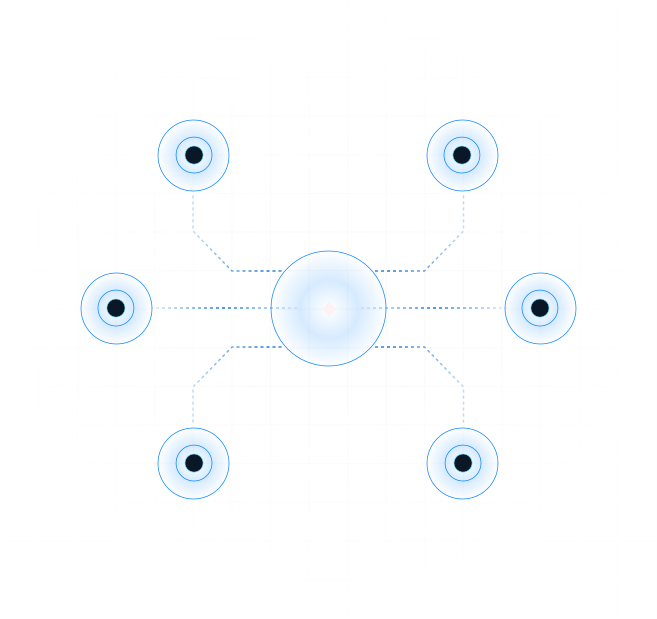
iCOUNTER operationalizes ecosystem risk in real time, detecting the active threats targeting your vendors, suppliers, MSPs, SaaS providers, partners, and broader digital ecosystem.

Legacy third-party cyber risk management was built to document what happened. CTOS is built to counter threats in near real-time.

Expose emerging security risks across third party vendors before they disrupt operations or weaken cyber security posture.

See CTOS in Action

Cybersecurity’s Third Wave is Here

The Third Wave

The industry is moving from static scorecards to real-time response.

Nearly half of breaches now involve vendors, suppliers, MSPs, SaaS providers, and partners around the enterprise. AI-enabled attacks are accelerating this trend. Questionnaire-driven TPRM, GRC, threat feeds, and SOC tools lack live risk visibility. Modern security teams need to detect, prioritize, and counter ecosystem risk before it reaches the enterprise.
Join the Third Wave
A Simple Operational Model for the Third Wave

Operationalize Your
Ecosystem Risk Intelligence
Enterprises are no longer treating third-party cyber risk management as a compliance exercise. They are operationalizing ecosystem risk across security, risk, intelligence, and operations teams.

step 1: DETECT

Threat Collection Edge
Continuously collect signals from adversary infrastructure, active compromise activity, exposed credentials, dark web sources, and third-party ecosystem telemetry.

step 2: DETERMINE

Risk Determination Engine
Correlate intelligence against live enterprise context, vendors, identities, assets, and relationships to determine what represents real operational risk at this moment.

step 3: MAP

Enterprise Digital Twin
Maintain a live model of vendors, suppliers, identities, assets, and third-party relationships, bringing operational context to every incoming signal.

step 4: ROUTE

Counter-Threat Operations
Route validated Risk Intelligence into operational workflows, vendor escalations, prescriptive remediation, and counter-threat execution without adding analyst burden.

“CTOS is the first platform we've seen
that treats intelligence as an operational
product — not a report to be filed.”

Head of Threat Intel · Fortune 50 Manufacturer
Banner

What is third party cyber risk management?

Third party cyber risk management involves identifying, assessing, and mitigating cybersecurity vulnerabilities introduced by external vendors, suppliers, and partners to protect an organization’s data and operations.

Why is continuous monitoring important in third party cyber risk management?

Continuous monitoring provides real-time visibility into vendor risk profiles, enabling organizations to detect emerging threats and suspicious activity promptly, which helps prevent security incidents and operational disruptions.

How does iCOUNTER’s CTOS improve third party risk management?

CTOS operationalizes ecosystem risk in real time by detecting active threats targeting vendors and partners, prioritizing risks based on exploitability and business impact, and automating remediation workflows before threats affect the enterprise.

What role do contractual obligations play in managing third party risk?

Clear contractual obligations, including cybersecurity clauses and incident reporting requirements, establish vendor accountability and set expectations for data protection and compliance, reducing compliance risk and enhancing security program effectiveness.

How can automation help in third party cyber risk management?

Automation streamlines risk assessments, reduces response times for cybersecurity questionnaires by up to 90%, minimizes human error, and enables continuous monitoring and rapid identification of vulnerabilities across third party attack surfaces.

What types of third party risks does CTOS address?

CTOS addresses a broad range of risks including data breaches, operational disruptions, compliance risk, and strategic risk arising from third party engagements and vendor relationships.

Who should use iCOUNTER’s Counter Threat Operating System?

CTOS is ideal for CISOs, third-party risk managers, security operations teams, and compliance officers in enterprises and public sector organizations with complex third party ecosystems seeking proactive cyber risk intelligence and mitigation.